




Best Indoor Climbing Frames for Toddlers (2026): Buyer's Guide
Best Indoor Climbing Frames for Toddlers (2026): Buyer's Guide
Indoor climbing frames give high-energy toddlers somewhere to put their drive. We compared 5 of the best options — from Pikler triangles to dual-mode Swedish ladders — on safety, durability, and long-term play value.
We assessed each climbing frame on five criteria: structural material and build quality, weight limit and age range, safety certifications, versatility (dual-function or single-use), and overall gross motor development value. ComfyBumpy's Swedish Ladder is included because it ranked on all five — we've noted this throughout so you can weigh it accordingly.
Toddlers climb. Couches, bookshelves, kitchen chairs — anything with a foothold is fair game. The question isn't whether your child will climb, it's whether they'll do it on something designed for it. A good indoor climbing frame channels that energy somewhere safe and builds exactly the gross motor skills children need to develop confidence and coordination.
We've looked at the five most recommended indoor climbing options for toddlers in 2026, comparing them on the factors that matter for real families: how long they'll last, how much space they take, what they're made of, and whether they're worth the investment.
Quick Comparison: All 5 Indoor Climbing Frames
| Product | Type | Age Range | Weight Limit | Material | Rating |
|---|---|---|---|---|---|
| ComfyBumpy Swedish Ladder with Table Top Pick | Swedish Ladder + Activity Table | 3-10 years | 175 lbs | Solid beechwood | ★★★★★ |
| Lovevery The Pikler Triangle | Pikler Triangle | 18 months - 6 years | 130 lbs | Solid birch | ★★★★☆ |
| VEVOR Kids Indoor Climbing Frame | Ladder + Slide combo | 1-7 years | 110 lbs | Pine wood | ★★★☆☆ |
| Step2 Naturally Playful Play Center | Plastic climber + slide | 2-6 years | 100 lbs | Plastic (HDPE) | ★★★☆☆ |
| Lily & River Little Climber Toddler Gym | A-frame climber | 18 months - 5 years | 100 lbs | Birch plywood | ★★★★☆ |
Full Reviews
ComfyBumpy Swedish Ladder with Inserted Activity Table
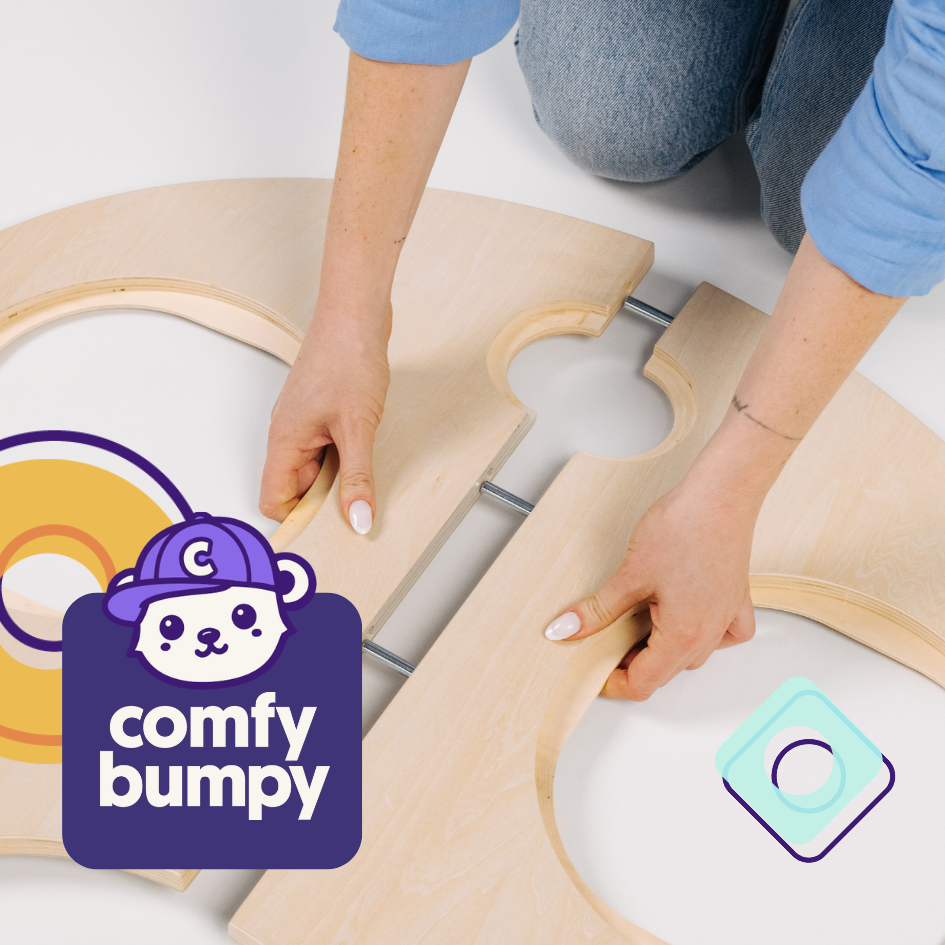
Most indoor climbing frames do one thing. The ComfyBumpy Swedish Ladder does two — and the combination is what makes it the standout pick in this comparison. The unit functions as a full-height Swedish ladder for climbing and hanging, and converts to an activity table for drawing, building, and seated play. This dual-mode design is the difference between a single-use toy and a piece of furniture that serves your child's development for years.
The construction is solid beechwood — one of the hardest, most stable hardwoods used in children's furniture. The 175-lb weight limit means this frame grows with your child well past toddler years. At $249.99, it's a considered purchase, but the cost-per-year of use is significantly lower than single-function alternatives that get outgrown or worn out faster.
The rungs are evenly spaced for natural climbing progression, and the frame's footprint is compact enough for most living rooms. Children who use it consistently develop noticeably better grip strength, upper body coordination, and spatial confidence — the kinds of skills Montessori educators have long emphasized through structured movement.
- ✓ Dual-mode: ladder and activity table
- ✓ 175-lb weight limit — grows to age 10+
- ✓ Solid beechwood construction
- ✓ Compact footprint for indoor use
- ✓ Montessori-aligned independent play design
- ✗ Age 3+ minimum (not for younger toddlers)
- ✗ Higher price than basic single-function frames
Lovevery The Pikler Triangle
The Pikler Triangle was designed by Hungarian pediatrician Dr. Emmi Pikler in the 1930s based on her research into child-led movement. It remains one of the most respected early childhood climbing tools available. Lovevery's version is well-constructed from solid birch with thoughtful safety details — smooth rungs, stable base hinges, and a low center of gravity that makes it particularly suitable from 18 months.
The A-frame design is self-contained and folds flat for storage, which is a practical advantage for smaller homes. The trade-off is the age ceiling — most children outgrow the Pikler's challenge by age 6, and the 130-lb weight limit is lower than beechwood alternatives.
- ✓ Suitable from 18 months
- ✓ Folds flat for storage
- ✓ Research-backed Pikler design
- ✓ High brand quality and safety standards
- ✗ Lower weight limit (130 lbs)
- ✗ Single-function climbing only
- ✗ Premium price for a single-use item
VEVOR Kids Indoor Climbing Frame with Slide
VEVOR offers a wide range of equipment, and this climbing frame is a solid budget option for families who want both ladder climbing and a slide in one unit. Pine wood construction is less dense than beech but adequate for light daily use. The wide age range (1-7) is appealing, though the lower weight limit means heavier children will age out sooner. Assembly is straightforward with clear instructions.
- ✓ Ladder and slide in one unit
- ✓ Budget-friendly price point
- ✓ Straightforward assembly
- ✗ Pine wood less durable than beech
- ✗ Lower weight limit (110 lbs)
- ✗ Less refined finish vs. premium options
Step2 Naturally Playful Play Center
Step2 makes excellent plastic play equipment, and this indoor play center is the most accessible entry point in this comparison price-wise. Suitable for very young toddlers from age 2 with small steps and a low platform height. The plastic construction is easy to clean and weather-resistant. Best for families who want something simple and affordable for the early toddler years, with the understanding that it'll be outgrown by age 5-6.
- ✓ Low entry price
- ✓ Easy to clean, weather-resistant
- ✓ Good for very early toddlers (age 2)
- ✗ Plastic doesn't match home aesthetics well
- ✗ Short age range (to age 6)
- ✗ Limited climbing challenge vs. wooden frames
Lily & River Little Climber Toddler Gym
Lily & River targets the Montessori market with clean Scandinavian aesthetics and child-centered design. The A-frame climber is suitable from 18 months and includes multiple climbing angles in a compact form. The birch plywood construction is durable for the price range. This is a strong option for families with younger toddlers who want a natural wood climbing frame without the full investment of a premium unit.
- ✓ From 18 months, good for young toddlers
- ✓ Natural birch, Montessori aesthetic
- ✓ Compact A-frame fits smaller spaces
- ✗ Single-function (climbing only)
- ✗ Age ceiling of 5 years
- ✗ 100-lb weight limit lower than solid wood alternatives
Why Climbing Is Critical for Toddler Development
Pediatricians and Montessori educators consistently recommend climbing as one of the highest-value physical activities for toddlers. Research in early childhood motor development shows that regular climbing activity produces measurable benefits across multiple developmental domains:
- → Gross motor development — climbing strengthens the core, upper body, and leg muscles essential for balance and coordinated movement
- → Spatial awareness — navigating a climbing structure builds understanding of height, distance, and body position in space
- → Risk assessment — children who regularly climb learn to assess physical challenges and make decisions about what is within their ability — a foundational life skill
- → Confidence — completing climbing challenges independently builds genuine self-efficacy, the belief that effort produces results
What to Look for Before You Buy
1. Wood species and construction quality
Beechwood is the gold standard for children's climbing equipment — denser and more impact-resistant than pine or plywood. Solid wood construction is stronger than laminated or engineered wood alternatives. Check for smooth, sanded rungs with no sharp edges.
2. Weight limit relative to your child's growth curve
If you buy a 100-lb frame for a 3-year-old, it may be unsafe by age 6 or 7. Look for frames with 150-175-lb limits to ensure usability through middle childhood without concerns about structural integrity.
3. Single function vs. dual function
A climbing frame that also serves as an activity table, desk, or storage unit gives better long-term value and a smaller net footprint in your home. Consider how the piece will be used on non-climbing days.
4. Floor protection
Place at least a 2-inch foam mat underneath and extending 2 feet around all sides of the frame. This is non-negotiable for any elevated climbing equipment. Interlocking foam floor tiles or a large gymnastics mat both work well.
5. Rung spacing
Rungs spaced 6-8 inches apart are appropriate for toddlers and young children. Too close and climbing offers no challenge; too far apart and small children can't reach comfortably. Check the rung diameter too — 1 to 1.25 inches is ideal for small hands.
6. When to supervise vs. when to step back
Children under 4 should always have an adult nearby when using climbing equipment. From ages 4-6, most children can climb with a parent in the room. By ages 6-8, children who have grown up with climbing equipment typically demonstrate very good self-regulation on the frame. Let your child set the pace for their own progression.
Frequently Asked Questions
What age is an indoor climbing frame suitable for toddlers?
Most indoor climbing frames designed for toddlers are suitable from age 2 or 3 years. Pikler triangles are often recommended from 18 months. Swedish ladders and larger climbing structures are typically rated from age 3 and up, with weight limits of 100-175 lbs for continued use through childhood.
Are indoor climbing frames safe for toddlers?
Yes, when properly constructed and age-appropriate. Look for ASTM-compliant frames made from solid wood or high-grade materials, with smooth edges and no pinch points. Place the frame on a foam mat. Supervision is recommended for children under 4 years.
What is a Swedish ladder and how is it different from a Pikler triangle?
A Swedish ladder is a vertical ladder structure with evenly spaced rungs designed for climbing and hanging. A Pikler triangle is an A-frame climbing structure designed by pediatrician Emmi Pikler to support gross motor development from infancy. Both support climbing but the Swedish ladder offers more vertical challenge and is suitable for older children through age 10 and beyond.
What surface should I put under an indoor climbing frame?
Place a thick foam mat (at least 2 inches) or interlocking foam tile mat under and around the climbing frame. This cushions falls and defines the play space. Never place climbing frames on hard surfaces like tile or hardwood without adequate mat coverage underneath.
Do indoor climbing frames help toddler development?
Yes. Climbing is one of the most effective forms of gross motor development in early childhood. Research supports that climbing activities strengthen core muscles, improve balance and coordination, develop spatial awareness, and build the risk assessment skills children need as they grow. Pediatricians and Montessori educators consistently recommend climbing as part of healthy active play.
Our Pick: ComfyBumpy Swedish Ladder with Table
The ComfyBumpy Swedish Ladder with Inserted Table earns the top spot because it does what no other frame in this comparison does: it works as a climbing structure and a functional activity table. The beechwood construction, 175-lb weight limit, and dual-mode design make it the highest long-term value pick for families looking for one piece that serves their child from age 3 through primary school years.
Shop the ComfyBumpy Swedish LadderThis guide was written by the ComfyBumpy team. Third-party product details sourced from manufacturer listings, independent review sites, and verified parent reviews. ComfyBumpy's own product is included in this comparison and ranked based on the same criteria applied to all products. Prices and availability subject to change.



Leave a comment